
The Ultimate 80s Showdown
There was a golden era when Saturday mornings were sacred. Kids growing up in the 1980s were glued to their TV screens following the adventures of two universes that competed for the attention, hearts, and pocket money of millions of fans worldwide: He-Man and the Masters of the Universe (1983) and ThunderCats (1985). Both series left an indelible mark on pop culture, but decades later the question remains unanswered: which one truly won the 80s?
In this article, we deliver the definitive analysis. We compare ratings, toys, characters, cultural legacy, influence on animation, and much more. There is no easy answer, but there are concrete facts. And if you are a fan of Lion-O, the Lord of the ThunderCats, or Mumm-Ra, you already know which side we lean toward — though we will try to be fair to both franchises.
Context: Two Titans of the Same Era
He-Man and the Masters of the Universe hit screens in 1983, produced by Filmation and based on Mattel's toy line. It was a revolution: the first animated series produced directly for the toy market, bypassing traditional public television. It aired in syndication, allowing it to reach hundreds of channels simultaneously. At its peak popularity, it aired in more than 130 countries and sold over $150 million in merchandise in 1985 alone.
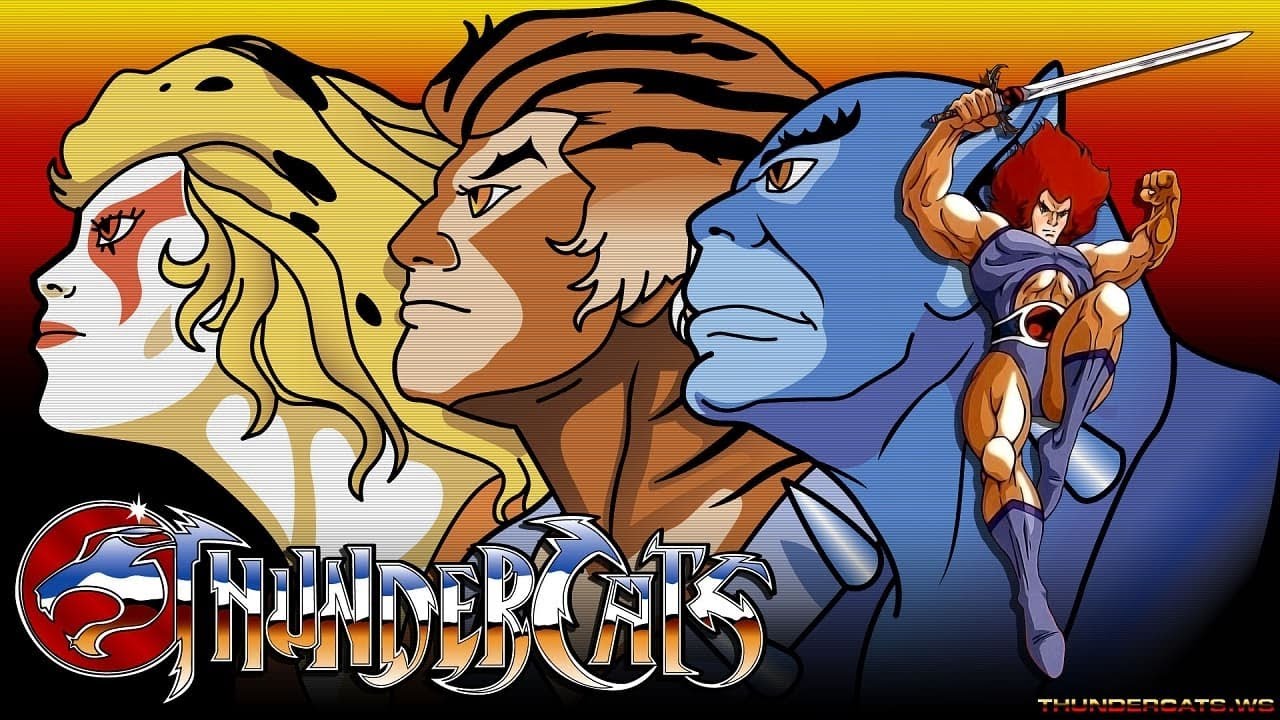
ThunderCats arrived in 1985, produced by Rankin-Bass/Telepictures, at a time when He-Man was already at its zenith. But ThunderCats bet on something different: a more mature narrative, more fluid animation, and psychologically deeper characters. Cheetara, Tygra, Panthro and the young Lion-O captured something He-Man never had: genuine growth arcs and a richer mythology. Across 4 seasons and 130 episodes, ThunderCats built an expansive universe that fans are still exploring today.
Head-to-Head Comparison: He-Man vs ThunderCats
| Category | He-Man (Masters of the Universe) | ThunderCats |
|---|---|---|
| Launch year | 1983 | 1985 |
| Episodes | 130 (seasons 1-2) + She-Ra | 130 episodes, 4 seasons |
| Studio | Filmation | Rankin-Bass / Telepictures |
| Peak toy sales | +$150M in 1985 (Mattel) | ~$70M (LJN Toys) |
| Countries aired | +130 countries (1985) | +70 countries |
| Animation quality | Limited (frequent reuse) | Superior — produced in Japan/Korea |
| Narrative depth | Episodic, no continuing arc | Multi-episode arcs, character development |
| Reboots / continuations | He-Man 2002, Masters 2021 (Netflix) | ThunderCats 2011, ThunderCats Roar 2019 |
| Confirmed movie | In development (Amazon, 2026) | Confirmed — Warner Bros. (2026) |
The Toy Factor: Where He-Man Won Outright
In pure commercial terms, He-Man was unbeatable. Mattel designed the toys before creating the show — the animation was literally a 22-minute advertisement. This strategy was so successful that it changed the children's television industry forever. In 1985, Masters of the Universe was the best-selling toy line in the Western world. Figures like Skeletor, Beast Man, and He-Man himself sold in astronomical quantities.
ThunderCats, represented by LJN Toys, also had their moment of glory, albeit more modest. The figures of Lion-O, Mumm-Ra, Panthro, and the imposing ThunderTank were moderate hits. What set ThunderCats toys apart was their design: more detailed, with unique features for each character. If you want to learn more about this history, our article on ThunderCats 80s toys covers the full LJN collection story.
The Narrative Factor: Where ThunderCats Shone
He-Man was pure episodic entertainment. Each chapter was self-contained, with very little character development and an explicit moral lesson at the end (literally, characters would turn to camera and deliver a life lesson). This made it predictable but also comforting for younger children.
ThunderCats bet on something different: Lion-O began the series as a child trapped in an adult body, and across 130 episodes he grew, learned, failed, and became the leader his people needed. The arcs of Mumm-Ra, the destruction of Thundera, the arrival of new ThunderCats like Pumyra, Bengali and Lynx-O, and the construction of New Thundera gave the series a real sense of progression that He-Man never achieved. For fans revisiting the best episodes of Season 1, this narrative difference is evident from the very first episode.
The Legacy: Who Held Up Better Over Time?
This is where the debate gets truly interesting. He-Man had a reboot in 2002 (fairly well received) and in 2021 Netflix released Kevin Smith's "Masters of the Universe: Revelation," which divided fans. ThunderCats had its own reboot in 2011 — generally considered superior — and "ThunderCats Roar" in 2019, controversial for its more comedic style.
However, when it comes to genuine nostalgia and fan devotion, ThunderCats has something special. The battle cry "ThunderCats, Ho!" remains immediately recognizable to anyone who grew up in the 80s. The Sword of Omens, the ThunderTank, the Cat's Lair... these elements have stayed in collective memory with a vitality that few series of their era can match.
In terms of 2026 films, both franchises have confirmed projects in development. But the ThunderCats movie from Warner Bros. already carries enormous anticipation, built from decades of accumulated love for the characters.
7 Facts That Define This Rivalry
- He-Man arrived first: It premiered in 1983, two full years before ThunderCats. This head start gave Mattel time to establish itself as the definitive reference in children's action animation.
- ThunderCats had better animation: Rankin-Bass contracted animation studios in Japan and South Korea to produce ThunderCats, resulting in a visual level far superior to Filmation, known for constantly reusing sequences.
- He-Man sold more toys at its peak: With over $150 million in sales in 1985, Masters of the Universe was the world's best-selling toy line that year.
- ThunderCats had an official crossover with He-Man: In 2016-2017, DC Comics published a 6-issue miniseries titled "He-Man/ThunderCats," in which both universes collided. Lion-O and He-Man shared adventures against Skeletor and Mumm-Ra.
- Death Battle decided it (in fiction): The popular YouTube show "Death Battle" pitted He-Man against Lion-O in its second season. The result was... controversial among fans, as expected.
- Filmation vs Rankin-Bass: While Filmation produced He-Man with limited animation to cut costs, Rankin-Bass invested more heavily in ThunderCats, which explains why the series still holds up visually decades later.
- Both series ended around the same time: He-Man concluded in 1985 (with She-Ra continuing the universe), while ThunderCats ran until 1989. Paradoxically, ThunderCats had greater longevity as an original series.
In the 2026 Movie
The year 2026 could be the definitive year to settle this debate on the big screen. Both franchises have movies in development expected in the coming years. The ThunderCats movie, confirmed by Warner Bros. and in active development, promises to bring Lion-O and his companions to live-action with the most advanced special effects. If the result is as powerful as the love fans have kept alive for four decades, ThunderCats could finally claim the title it always deserved in popular terms.
And you — which side were you on? Were you more of a He-Man or a ThunderCats kid? Your answer says a lot about how you experienced animation in the 80s. Leave your opinion in the comments and tell us which series shaped your childhood more. This debate has been going on for 40 years — and it's still not over.
📚 Related Articles
- Top 10 Best Episodes of ThunderCats Season 1
- ThunderCats: The Movie - Everything we know about the film with Adam Wingard
- WilyKit and WilyKat: The Mischievous Twins of the ThunderCats — History, Powers and Curiosities
- Tygra: The Invisible Architect of the ThunderCats — History, Powers and Curiosities
- Thundera: The Destroyed Homeworld of the ThunderCats
⚡ FREQUENTLY ASKED QUESTIONS ⚡
What should you know about: The Ultimate 80s Showdown?
There was a golden era when Saturday mornings were sacred. Kids growing up in the 1980s were glued to their TV screens following the adventures of two universes that competed for the attention, hearts, and pocket money ...
What should you know about: Context: Two Titans of the Same Era?
He-Man and the Masters of the Universe hit screens in 1983, produced by Filmation and based on Mattel's toy line. It was a revolution: the first animated series produced directly for the toy market, bypassing ...
What should you know about: Head-to-Head Comparison: He-Man vs ThunderCats?
In pure commercial terms, He-Man was unbeatable. Mattel designed the toys before creating the show — the animation was literally a 22-minute advertisement. This strategy was so successful that it changed the children's ...
What should you know about: The Toy Factor: Where He-Man Won Outright?
In pure commercial terms, He-Man was unbeatable. Mattel designed the toys before creating the show — the animation was literally a 22-minute advertisement. This strategy was so successful that it changed the children's ...
What should you know about: The Narrative Factor: Where ThunderCats Shone?
He-Man was pure episodic entertainment. Each chapter was self-contained, with very little character development and an explicit moral lesson at the end (literally, characters would turn to camera and deliver a life ...
